PME 811 Innovation, Teaching and Learning
Module 1 Entry 1: Reflection as a Way of Life

As a new teacher, I'm always looking for ways to 'spice up' my pedagogical repertoire, and figure out what works best for me. At the same time, I find myself gravitating toward a specific quote. "Culture eats strategy for breakfast", attributed to management consultant Peter Drucker.
Given that my area of concentration is Literacy Education, I could investigate the different ways of engaging students in the literacy process. Or, I could choose to focus on culture. In other words, I can make use of every strategy in the book; incorporate technology; audiobooks; graphic novels; and culturally relevant texts, in order to boost student interest. In the end, however, I think it comes down to the classroom and community culture. Do students have books at home? Do they enjoy reading? Why or Why not? I often think about what I need to do to motivate those students who don't enjoy reading or learning. I also think about how I can get students to buy-in to this culture, and how it can be extended to the home. At the very least, reading is a process and gateway to learning, and potentially understanding the self. The hope is that students become curious about themselves, and their place in time (there's an element of Historical awareness here, as well). I believe the act of reading and reflecting can solidify that process and allow for true learning to take place; not only of themselves but of others.
I would argue that these are more pressing challenges. If the aim is to develop a class, school, and community culture of reading; and not simply reading to pass the time but to critically reflect on what's being read, how is that done? Especially, and I think many can agree on this, when many young students are more concerned with video games and apps.
In short, How do I demonstrate the benefits of reading and critical reflection in order to develop a culture of reading in our classroom, school, and community?
Module 1 Entry 2: Ideas on Developing a Reading Culture
After considering the comments from my colleagues, I think I'm beginning to gain a better understanding of how I can help create critical readers and a reading culture.
One colleague mentioned that for them, reading began in the home. This is certainly ideal, but I recognize the reality for some families who either don't have the time or the home library to do so. One way around this could be to take mini, walking trips to our community library and/or taking school library books home, and encouraging parents to read with their kids. Another fun idea that was suggested involves pinning a sign outside your door highlighting the books that the teachers/students are reading.
Another colleague discussed the positive impact of the 'Book Tasting'. In this setup, teachers use tablecloths, layout books (according to genre/level) on the tables. Students then 'taste' each book in order to determine which they want to read for the week. This could be followed up with a reflection. This colleague also suggested the 'Buddy Reading Program' where younger students are paired with older students who encourage and model reading. Another quirky, yet engaging idea was recommended where teachers 'market' their books by creating infomercials; act as characters to promote their stories and inspire other readers. Last but not least was the 'Book Club' where students of certain age groups get together to read a book and discuss its themes, plots, character developments, and literary devices.
Before ending this week's second entry, I'd also like to thank my colleague who recommended the book 'Readicide' by Kelly Gallagher. I decided to try out one of the strategies. I first made sure to include 20 minutes of Independent Reading where I walked around and questioned students; I asked for their summaries and had them provide their ratings (and what would make the book better for them). Here, the intention was not to assess formally but to encourage talking and thinking about what they read. Following a class read aloud, I had students question the book. It took some time, but they were starting to understand how to think more deeply about the story; rather than simple comprehension questions like, "Who is the author?" Next week, I will focus on more research behind developing critically thinking readers and creating a reading culture.
PME 811 Module 2 Entry 1: Research on Developing a Reading Culture

Encouraging students, school-wide, to partake in developing a reading culture begins with involving them in the process. For example, the article suggests having the students build their own classroom library. Students can complete surveys on what their favourite genres and book series are.
Another strategy is similar to what a colleague suggested last week; about the door signs that state which books are currently being read by each teacher. In this variation, teachers would be encouraged to carry with them the book that they are presently reading, as well as a book that they've recently completed. The hope is that this would attract students' attention, and have teachers lead by example.
Another big favourite of mine is having the students complete mini-reviews on sticky notes. The notes could explain their ratings, and why one might enjoy the book. Each sticky-note would be placed inside of a completed book. This might remind you of Indigo's 'Staff Picks.'
Overall, I enjoyed this Edutopia article. I think these strategies are quite accessible, both for staff and students alike. In my next post, I will focus more on technical research as it relates to reading and critical th
inking. By the end of this blog, I hope to have an extensive bank of strategies, as well as the evidence to promote them. To conclude, I'd like you to reflect on what reading does for you? Intellectually and emotionally? What drives you to read?
Lee, L., & Losee, M. (2020). Schoolwide Strategies for Promoting a Love of Reading. Edutopia. Retrieved 7 October 2020, from https://www.edutopia.org/article/schoolwide-strategies-promoting-love-reading.
Module 2 Entry 2: Challenges of Developing a Reading Culture
This week, I read Jane Roland Martin's article, There's Too Much to Teach: Cultural Wealth in an Age of Scarcity. What I loved about this article was how it positively impacted my broader view of education. I've always thought that school is meant to form the whole individual. It allows you to determine your interests; develop positive relationships; hone your intellectual and technical skills, among other things. Prior to reading this article, I think I underestimated how attainable a new model could be, as well as the significance of what we value.
Jane Martin suggests that the difficulties in creating this new education model lies in both the "how" and the "what." In other words, we can improve school so that it better reflects our everchanging, diverse culture. What's more, school would not be the only realm (or most heavily relied upon) where children receive their education. Martin says this can be done when schools start, "sharing some of its present functions and custodial responsibilities with other educational agents: for instance, vocational education with industry; science, social studies, and art education with museums; music education with symphony orchestras and opera companies; and physical education with health professions" (Martin, 1996). In essence, education needs to become more holistic in both its content and from where this content delivery (or experiencing) occurs.
So, how does this article tie into my burning question about Reading Culture? Well, the article discusses 'cultural wealth.' In short, it's the idea that we place emphasis on specific areas of knowledge, skills, ways of doing things. Considering our evolving population; the author suggests that it's time to reevaluate our wealth. This doesn't mean do away with everything we've taught or valued. Instead, it adds to the riches of our human potentialities and experiences. Now, when I think about literature and reading culture. Perhaps I can make use of these changes. I can work with my local libraries, museums, vocational industries, orchestras, and cultural community centres; in doing so, our community can slowly accumulate a catalogue of reading material that reflects the culture we're trying to create. One where students see themselves in what they read and learn to value different educational possibilities.
Martin, J. (1996). There's Too Much to Teach: Cultural Wealth in an Age of Scarcity. Educational Researcher, 25(2), 4-16. https://doi.org/10.3102/0013189x025002004
PME 811 Module 3 Entry 1: More Research

So, reflecting on this idea of cultural wealth from Martin helps me connect to a concern that George Tomkins had in his article, Foreign Influences on Curriculum and Curriculum Policy Making in Canada. Although slightly outdated, the article argues that in the past, Canada has relied (at times) too heavily on outside sources for its curriculum approaches. Specifically American ideas and materials/publishing content.
In our modern context, this has significantly changed. We have a wealth of resources that are uniquely Canadian, published in Canada. Our curriculum approaches and trends (e.g., Maker space, 21st-century learners, coding, culturally responsive pedagogy, etc.) continue to remain influenced by American ideas, I believe. In Ontario, there's been a recent change to the Math curriculum. We are now asked to, "go back to the basics" in order to improve test scores (EQAO), which is also getting an overhaul, or scrapped entirely. So, certainly, an interesting time because even Tomkins in 1981 spoke about this trend as a part of the, "nostrums currently being purveyed in our present conservative milieu" (Tomkins, 1981, pp. 165). As an aside, below I will link an article highlighting the current, Canadian curriculum and teaching trends.
You may be asking how the Tomkins article relates to my burning question, how to develop a critically thinking reading culture. Well, considering the main ideas from Tomkins (and Martin last week) I believe its vital to highlight Canadian literature in this reading culture. By no means am I advocating the negation of popular books like Harry Potter or Dog Man (a fan favourite in the Junior grades), again, it's about finding that balance. I can use a strategy from one of Edutopia articles discussed in a previous post. I would like to create trailers or commercials drawing my student's attention to specifically Canadian stories. This includes stories about immigrants and Indigenous peoples. The hope is that learn to recognize the value of our literature that is often forgotten about in the shadows of great American novels.
In my second post, later this week, I will link developing a reading culture to the idea of critical and philosophical thinking.
Tomkins, G. (1981). Foreign Influences on Curriculum and Curriculum Policy Making in Canada: Some Impressions in Historical and Contemporary Perspective. Curriculum Inquiry, 11(2), 157-166. doi:10.2307/1179706
Trends in Canadian education 2018-2019. Edcan.ca. (2019). Retrieved 21 October 2020, from https://www.edcan.ca/articles/trends-2018-2019/.
PME 811 Module 3 Entry 2: Reading Culture and Philosophical Thinking
Prior to writing these blog posts, I made sure to remind myself of what I'm trying to uncover. At its core, developing a critical thinking and reading culture centers around teaching and modeling a way of being in the world. That is, loving the pursuit of learning and knowledge. Or what Theodore Christou explains as striving towards the ethic of Philosophia.
Reflecting on Theodore Christou's article, The Case for Philosophical Mindedness led me to a few useful conclusions that I think can be applied to my guiding question. The first is to understand that the path towards this way of being requires learning, unlearning, critically-thinking, and re-learning. Christou says, "As a model of being philosophically minded, Socrates relentlessly pursues richer and deeper understanding, arguing that a life that is not examined continuously is not worth living. As educationists, committed to a life concerned with teaching and learning, knowledge and understanding, action and contemplation, we must not rest on our presumptions" (Christou and Bullock, 2012). This quote can be connected to my second conclusion, which is; a reading culture that relies on critical reflection is good for the soul.
Helping my students follow in the footsteps of great thinkers can provide them the tools to read passionately (based on their interests and goals) and question what they read. Through questioning and dialogue, students form deeper understandings of themselves, their neighbours, and the world at large. So, Why strive towards this ethic, this critically thinking culture? What is so important about helping students grow and develop these ways of being? Well, this is precisely what I intend to find out. My hunch is that it's the right thing to do. It's part of becoming an impactful educator; one who helps others make sense of the world, and the one they wish to create. In our hearts is the desire to foster responsibly thinking citizens who care for nature and others. I believe reading is a crucial stepping stone in this journey.
Christou, T., & Bullock, S. (2012). The Case for Philosophical Mindedness. Philosophical Inquiry In Education, 20(1), 13-22. Retrieved 14 October 2020, from https://journals-sfu-ca.proxy.queensu.ca/pie/index.php/pie/article/view/310.
PME 811 Module 4 Entry 1: Critical Reading Culture
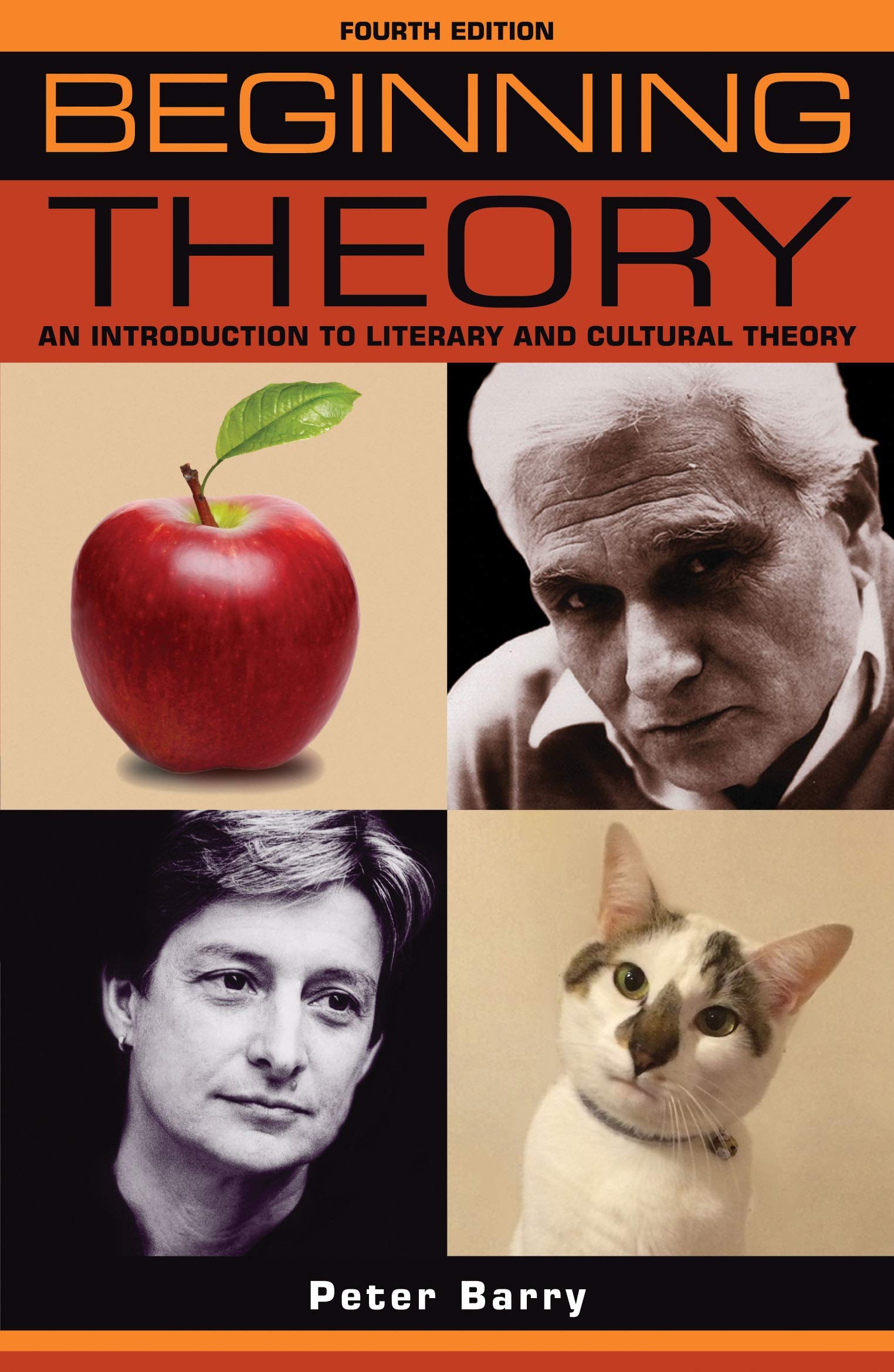
I've decided to read this book for two reasons. First, I was hoping to give myself a 'refresher' on some of the learning I'd done in my undergrad. Second, I hope to incorporate some of these theories into my lessons (Upper Elementary) so that my student could become used to reading more critically. I enjoy how each chapter is broken down into different sections. For example, the first chapter covers 'Liberal Humanism'; we're introduced to the history of the movement; how it impacted or clashed with future movements; a list of main concepts, finally, a section where you're asked to apply that theory to a short passage by considering specific questions.
Beginning with the Liberal Humanists, they are passionate about our common humanity and the individual. One of their tenets is that "Human nature is essentially unchanging. The same passions, emotions, and even situations are seen again and again throughout human history" (Barry, 2017, pp. 20). Liberal Humanists are concerned with analyzing the text more so than any underlying cultural themes or philosophies outside of the text. So, something like a 'close reading' where the reader must extract word meaning and relationships between overarching values (e.g., life and art), this style, Barry says, "is ultimately driven by its moral convictions" (2017, pp. 32) or in other words, why we value certain things and how they are weighed against others.
So, what does this all mean for my classroom? I think having a brief lesson on the history of this movement could certainly prepare students for high school English class where they would be expected to read closely. I also think by practicing this method students might become more attuned to the values and morals of characters and the text itself. Ideally, it would provide students with the tools to closely analyze a text and understand what it's trying to convey to the reader.
Barry, P. (2017). Beginning theory: An Introduction to Literary and Cultural Theory (4th ed.). Manchester University Press.
Peter Barry, English professor at Aberystwyth University, specializes in literary theory, twentieth and twenty-first-century literature. The specific chapter that pertains to the central question is postcolonial criticism.
The purpose of this chapter is to enlighten readers on the meaning of postcolonial theory and how it is implemented. Given that this chapter is found within a general text of theory; it is presented as unbiased as possible. The chapter begins with a historical background, then relevant reading, followed by examples and instruction on how to apply the theory to a piece of text.
At the end of this chapter design, Barry presents a list of six key aspects of postcolonial critic practice. For example, “They reject the claims of universalism made on behalf of canonical Western literature and seek to show its limitations of outlook, especially its general inability to empathise across boundaries of cultural and ethnic difference” (Barry, 2017, pp. 201).
As an educator, I believe this chapter is useful because it attempts to demonstrate how this theory can be used in a practical context. In other words, this theory can be presented to students to help them analyze texts from Indigenous and non-indigenous authors to examine how “literature is often evasively and crucially silent on matters concerned with colonialism and imperialism” (pp. 201). Specifically, perspectives on First Nations, Metis, and Inuit peoples or any other peoples in postcolonial contexts. For example, we might question how characters are represented; how the author's voice contributes to the depiction or lack thereof of colonized vs non-colonized figures; how the content and accuracy impact the morality or intention of the story.
What is becoming increasingly important in education is teachers working to incorporate diverse texts (e.g., novels, films, graphic novels, etc.) that represent their students. This is consistently presented as almost a prerequisite for getting students excited about reading. Since our central question revolved around how to best develop a critical reading culture; I believe this chapter/theory can aid developing critical readers because it helps connect to Indigenous or post-colonial historical realities can aid student engagement.
PME 811 Module 5 Entry 1: Assessment in a Critical Reading Culture

In Indigenous contexts, researcher Kath Snow found that a noteworthy positive aspect of this approach involved students working with an Elder to interpret the meaning of stories. One student responded, ‘“working face-to-face with an Elder is easier and more fun, you can’t chat and share tea with a book, you can’t ask a book questions.”’ Snow goes on to add that storyboard, performance, and video finalization, and discussions with Elders supported engagement and comprehension (Snow et al., 2020, pp. 229). I think it's safe to say that inviting authors/storytellers (especially local ones) can drastically improve student participation and enjoyment, and further develop critical skills, regardless of cultural background.
Overall, moving towards a critical reading culture is not without its challenges. It may require patience and taking risks. Students may need assistance learning to read more critically and/or using the theories and strategies mentioned in previous posts. It might also require that teachers adopt different methods of assessment. One method that I've witnessed is having students question the author while independently reading. Using sticky notes, students could question the author (e.g., What is the purpose of developing the character in this way?); when discussing literary function or features, students could write down examples of metaphors, words that evoke vivid images or feelings, or similies. In general, I think the assessment of critical reading must be timely, and feedback should be constructive. This could also be done as a consolidation in a large group where students are encouraged to assess each other and themselves.
Snow, K., Doucette, N., & Francis, N. (2020). Generational Bridges: Supporting Literacy Development With Elder Storytelling and Video Performance. Learning Landscapes, 13(1), 219-235. https://doi.org/10.36510/learnland.v13i1.1016
PME 811 Module 5 Entry 2: Final Thoughts
As I conclude this series of blog entries, I'd like to return to some of my guiding questions. How can I best develop a critical reading culture, and why is it important, what function does it serve?
In order to best develop a critical reading culture, as I'd mentioned in the first entry, students must first be presented with material that reflects their interests, as well as their lived experiences. Furthermore, taking advantage of modern resources and technology can further aid student engagement (i.e., apps, authors, and storytellers). Moving forward, I must take the time to model theoretical application (e.g., liberal humanist theory and/or postcolonial theory) in the form of analyzing and questioning what we read, before students can be expected to perform this on their own.
A critical reading culture is important for several reasons. One of which I'd discussed in a previous entry is that it serves to connect students more deeply to content, as well as their ability as meta-cognitive readers; that is, thinking about how they read. Another reason is based on the understanding that in our modern, digital age, we are constantly bombarded with information, opinions, and 'facts of the matter.' As human beings, we need to be open to the free exchange of ideas and perspectives, while still maintaining a critical eye so as to be wary of subversive intentions, and harmful information. A lot of which can be seen through the presentation of COVID and the US election. Lastly, critical reading helps us better understand ourselves and each other. Engaging with a text connects students through heart and mind; understanding that reading deeply requires work can also serve to enlighten students to the reality that our stories and words are just as complex as our thoughts, emotions, and actions. In doing so, students might become more appreciative, empathetic, and understanding of our differences and similarities.
Comments
Post a Comment